原标题:PBPK模型的拓展应用:无体内PK数据时,如何评估化学结构和PK性质类似的新化合物
PBPK模型的拓展应用:无体内PK数据时,如何评估化学结构和PK性质类似的新化合物
Structural and functional pharmacokinetic analogs for physiologically based pharmacokinetic (PBPK) model evaluation
导读
生理药代动力学PBPK模型可预测化合物在体内的吸收、分布、代谢和消除,但通常需要有该化合物的体内PK数据才能搭建和验证模型,本研究采用已知PK等数据的化合物搭建模型,最终应用PBPK模型预测结构和PK性质都相似的新化合物的体内PK。
来源
Regul Toxicol Pharmacol. 2018 Nov;99:61-77.
作者
Corie A. Ellison
美国宝洁公司
摘要翻译人
王钰玺 凡默谷技术部
软件在本项目中的主要用途
采用GastroPlus模拟和验证不同化合物的PK
关键词
PK
生理药代动力学PBPK
建模
类似物
构效关系SAR
摘要译文
生理药代动力学PBPK模型可以模拟体内化合物的吸收,分布,代谢和消除。模型的验证是PBPK模型搭建过程的关键步骤,一般通过PBPK模型的预测值与实测的PK数据进行比较合验证。因为PBPK模型验证的必要条件是化合物PK数据的可获得性,这一必要条件限制了PBPK模型的应用和被接受的程度,而化合物的PK数据通常只有一部分或无法获得。
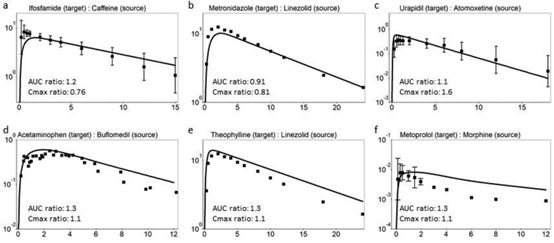
本文中的项目检测了以下假设:先采用化合物数据集(具有PK数据的化合物)开发充分验证过的PBPK模型,然后用这些模型去评价新的目标化合物(无PK数据的化合物),应用的条件是新的化合物与开发好的PBPK模型的某个化合物在化学结构和PK性质上是相似的。
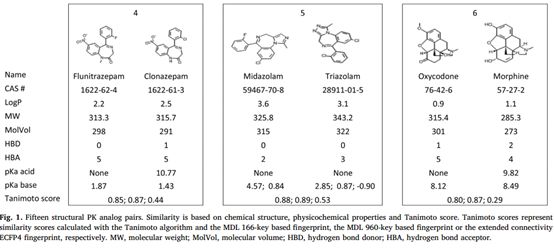
该项目现对符合以下条件的一些化学结构和PK性质类似的化合物,已成功地开展PBPK模型进行评估:化合物属于BDDCS I类和ECCS II类,且不是P-gp外排转运体的底物。BDDCS I类是指基于药物体内处置的生物药剂学分类系统中高溶解,高代谢程度,ECCS II类是指增加了清除率的生物药剂学分类系统ECCS模型(Extended Clearance Classification System)中高渗透性的碱性和中性化合物且肝代谢是其主要清除途径的化合物。
结果表明,化学结构相似和PK性质相似的两种方法都可以识别新化合物的PK相似性,可作为评估PBPK模型的替代方法。
随着不采用动物开展试验的不断发展,开发不依赖于PK数据的评估/验证PBPK模型的替代方法变得越来越重要。
Abstract
Physiologically based pharmacokinetic (PBPK) models enable simulations of absorption, distribution, metabolism, and elimination of chemicals from the body. Model evaluation is a key step in the PBPK model development processes whereby model predictions are compared to pharmacokinetic (PK) data. A prerequisite for PBPK model evaluation has always been the availability of PK data for the modeled compound, a requirement which has limited the use and acceptance of PBPK models since PK data is often limited or not available. The current work tests the hypothesis that an adequately developed PBPK model for a target chemical (chemical with no PK data) can be evaluated using PK data from a source chemical (chemical with existing PK data). Two different approaches for identifying the source chemical, a structural PK analog and functional PK analog technique, are used to evaluate a series of oral human PBPK models. Results show that both analog approaches can identify PK analogs which display similar PK as the target chemical and can be used as alternative ways for evaluating PBPK models. As animal free safety assessment strategies continue to develop, it's important to develop alternative approaches for PBPK model evaluation which does not rely on generating new PK data.