
非酒精性脂肪性肝炎(NASH)是非酒精性脂肪肝疾病(NAFLD)重要的的炎性亚型之一,而且非酒精性脂肪性肝炎(NASH)与疾病进展、肝硬化的发展以及需要肝移植有关。 尽管具有重要意义,但NASH在临床实践中并未得到广泛认可。
研究发现
非酒精性脂肪性肝炎(NASH)是非酒精性脂肪肝疾病(NAFLD)重要的的炎性亚型之一,而且非酒精性脂肪性肝炎(NASH)与疾病进展、肝硬化的发展以及需要肝移植有关。 尽管具有重要意义,但NASH在临床实践中并未得到广泛认可。
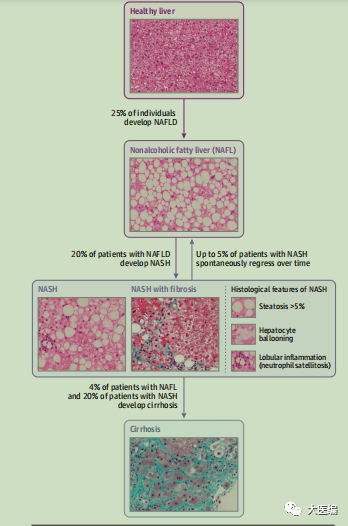
Fig 1非酒精性肝炎的组织病理和流行病学特点
结论
非酒精性脂肪性肝炎在代谢性疾病和肥胖症患者中更为普遍,约有20%的病例进展为肝硬化,并且与肝特异性和总体死亡率的上升有关。 需要对非酒精性脂肪性肝炎患者进行早期识别和针对性治疗,以改善患者预后,包括指导患者进行密集的生活方式改变以促进体重减轻,并推荐肥胖治疗进行肥胖和代谢性疾病的治疗。
原文阅读
IMPORTANCE
Nonalcoholic steatohepatitis (NASH) is the inflammatory subtype of
nonalcoholic fatty liver disease (NAFLD) and is associated with disease progression,development of cirrhosis, and need for liver transplant. Despite its importance, NASH is underrecognized in clinical practice.
OBSERVATIONS NASH
affects an estimated 3% to 6% of the US population and the
prevalence is increasing. NASH is strongly associated with obesity, dyslipidemia, type 2 diabetes, and metabolic syndrome. Although a number of noninvasive tests and scoring systems exist to characterize NAFLD and NASH, liver biopsy is the only accepted method for diagnosis of NASH. Currently, no NASH-specific therapies are approved by the US Food and Drug Administration. Lifestyle modification is the mainstay of treatment, including dietary changes and exercise, with the primary goal being weight loss. Substantial improvement in histologic outcomes, including fibrosis, is directly correlated with increasing weight loss. In some cases, bariatric surgery may be indicated to achieve and maintain the necessary degree of weight loss required for therapeutic effect. An estimated 20% of patients with NASH will develop cirrhosis, and NASH is predicted to become the leading indication for liver transplants in the US. The mortality rate among patients with NASH is substantially higher than the general population or patients without this inflammatory subtype of NAFLD, with
annual all-cause mortality rate of 25.56 per 1000 person-years and a liver-specific mortality rate of 11.77 per 1000 person-years.
CONCLUSIONS AND RELEVANCE
Nonalcoholic steatohepatitis affects 3% to 6% of the US population, is more prevalent in patients with metabolic disease and obesity ,progresses to cirrhosis in approximately 20% of cases, and is associated with increased rates of liver-specific and overall mortality. Early identification and targeted treatment of
patients with nonalcoholic steatohepatitis are needed to improve patient outcomes, including directing patients toward intensive lifestyle modification to promote weight loss and referral for bariatric surgery as indicated for management of obesity
and metabolic disease.
Reference:JAMA. 2020;323(12):1175-1183. doi:10.1001/jama.2020.2298
来源:Andrew 大医编